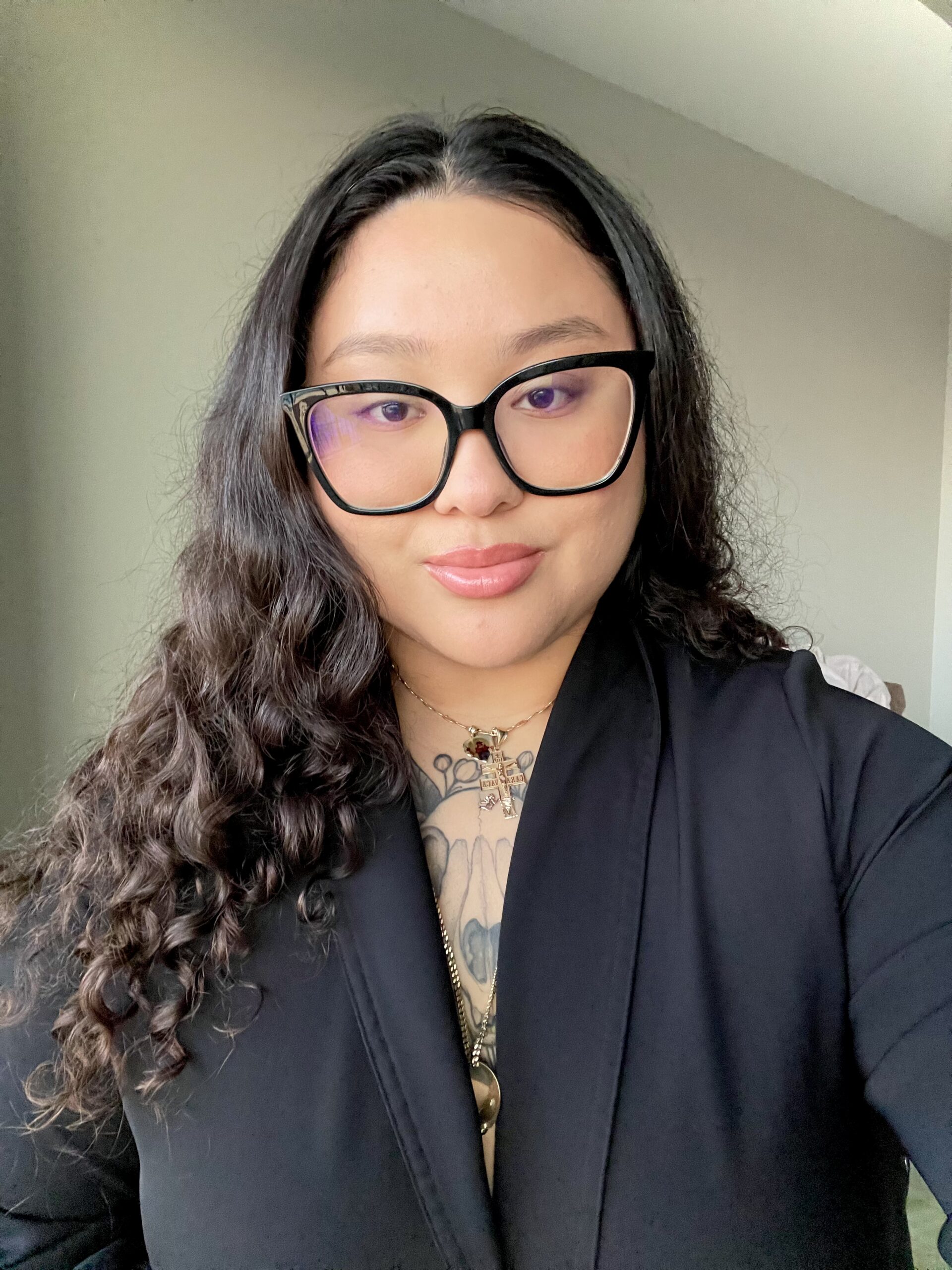
Kelly Lucia Rodriguez is a Ph.D. student in the ASU Law and Psychology Doctoral program in the New College of Interdisciplinary Arts and Sciences. Kelly rises from South Central Los Angeles, California and descends from Mexican and Salvadorian parents. As an undergraduate, Kelly attended East Los Angeles College in Monterey Park, CA where she began her research training through the NIH-funded undergraduate biomedical program Building Infrastructure Leading to Diversity (BUILD) Promoting Opportunities for Diversity in Education and Research (PODER) working with Dr. Bryan Horowitz as well as received an AA-T in Psychology in 2021. In 2023, Kelly received a BA in Psychology from California State University Northridge where she worked in the Promoting the Use of Evidence-based Practices: Narrowing the Treatment Engagement Gap (PUENTE) Lab directed by Dr. Jonathan Martinez for two years. Additionally, Kelly received summer trainings during 2022 in the Summer Training Academy for Research Success (STARS) Program at UCSD I was mentored by Dr. Prashant Bharadwaj and during 2021 in the San Francisco State University (SFSU) BUILD PODER Summer R Coding program. Recently, in 2025 Kelly completed a Masters Degree in Research Psychology, with a focus on adverse childhood experiences and the longitudinal impacts on later youth mental health.
Kelly’s research focused on adverse childhood experiences (e.g., abuse, neglect, family dysfunction) exposure and its impact on youths socioemotional well-being as well as the protective factors to promote mental health. Previously, she also investigated Latinx young adults’ mental health since the 2016 presidency; following that project, her research searched for factors increasing mental health service utilization among youth. This project led to analyzing parental impacts on youth mental health service utilization and the moderation of parental generational status. Most recently, her thesis explored adverse childhood experiences and the longitudinal impacts on later youth/ young adulthood substance use and suicide ideation. Now, working with Dr. O’Hara she is interested in supporting intervention design through scientific support to promote youth mental well-being and the intersectionality between interventions and the court system.